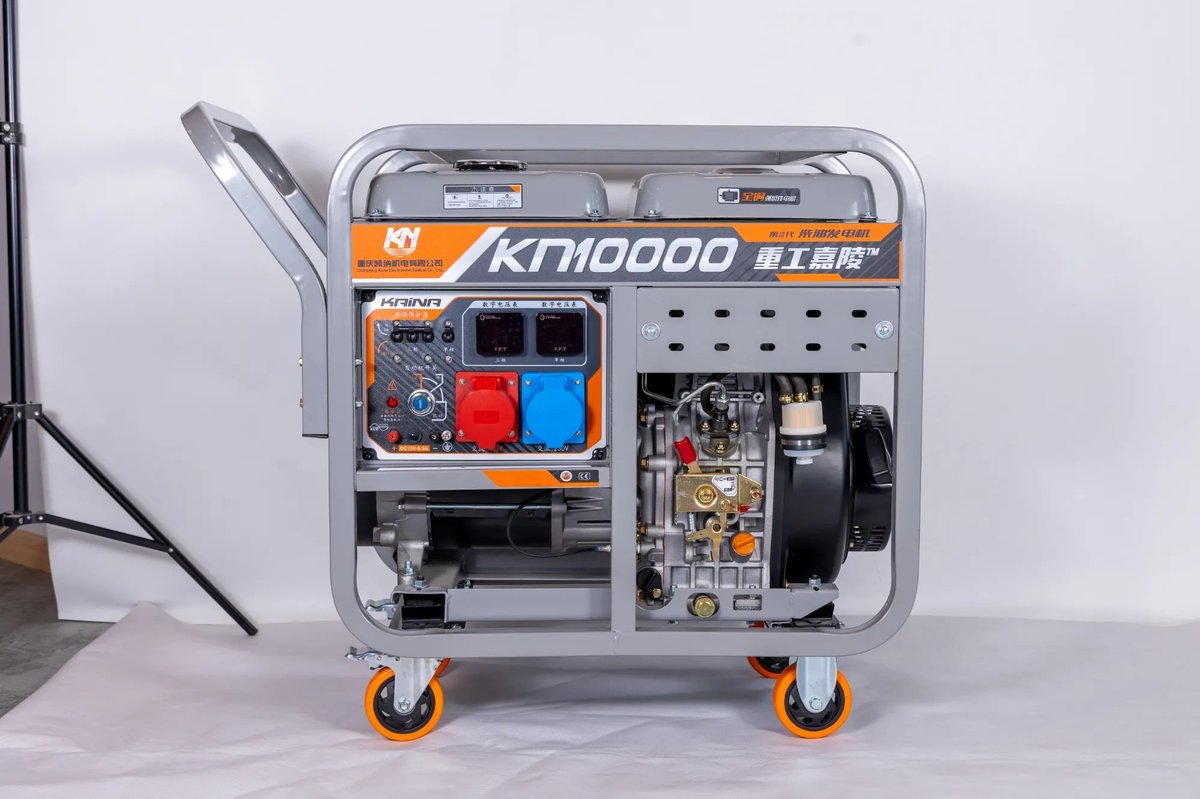
When the lights go out, the job site loses power, or your off-grid adventure needs reliable juice, a portable generator isn't just a convenience—it's a lifeline. But for truly serious power, efficiency, and longevity, many turn their eyes to the robust workhorse of the power world: the portable diesel generator. Choosing the right one for your specific needs isn't about picking the biggest or cheapest; it's about understanding what makes these machines tick and matching their capabilities to your demands.
This guide will cut through the noise, helping you identify the perfect portable diesel electric generator that won't just meet your expectations, but exceed them, offering dependable power when you need it most.
At a Glance: Key Takeaways for Your Diesel Generator Search
- Diesel Dominates Durability: Expect longer lifespans, greater reliability, and lower long-term operating costs than gasoline alternatives.
- Power & Efficiency Champs: Diesel engines are incredibly fuel-efficient, delivering high power output and extended runtimes.
- Match Watts to Needs: Carefully calculate your required running and surge wattage to avoid underpowering (or overspending).
- Fuel Flexibility: Consider pure diesel for maximum efficiency, or dual/tri-fuel options for versatility with gasoline, propane, or natural gas.
- Safety is Non-Negotiable: Always prioritize features like low oil shutdown, CO alarms, and proper ventilation.
- Portability Varies: Some diesel generators are heavy-duty beasts, others are surprisingly light for their output. Assess your movement needs.
Why Go Diesel? Unpacking the Core Advantages
So, what exactly is a portable diesel generator, and why should it be on your radar? Simply put, it's a compact, movable device that converts diesel fuel into electrical energy. Think of it as a small, mighty power station you can transport to construction sites, remote cabins, outdoor events, or use as essential home backup during outages. It works by having an engine spin an alternator, which then generates the electricity for your tools, appliances, or critical systems.
The choice to go diesel often comes down to a few compelling advantages that make it stand out from its gasoline-powered cousins:
- Unmatched Fuel Efficiency: Diesel generators are champions of converting fuel into energy, leading to significantly longer run times per tank. This means fewer refueling stops and, over time, substantial savings. Research by Smith et al. (2022) suggests that high-performance generators can lead to up to 30% in fuel costs over five years. While car MPG varies greatly (e.g., a Honda Civic at 42 MPG vs. a Tesla Model 3 at 141 MPGe), the underlying principle of diesel's efficient combustion translates directly to generator performance.
- Built to Last (and Last): Diesel engines are inherently more durable and designed for heavy-duty, continuous operation. Their robust construction translates to a longer lifespan and less frequent maintenance, making them a wise long-term investment.
- Higher Power Output: Need to run power-hungry equipment? Diesel generators typically deliver a higher power output, making them ideal for demanding industrial applications, whole-house backup, or large job sites.
- Safer Fuel: Diesel fuel has a higher flash point than gasoline, meaning it's less flammable and presents a lower fire risk during storage and use.
- Cleaner Emissions (Relatively Speaking): Modern diesel generators often produce fewer greenhouse gases compared to gasoline models, contributing to a slightly cleaner environmental footprint.
These benefits combine to make diesel generators a top choice for anyone prioritizing reliability, long-term cost savings, and serious power output.
Diesel vs. Gasoline: A Head-to-Head Power Play
When considering a portable generator, the gasoline versus diesel debate is often front and center. While gasoline generators have their place, understanding the key differences will help you make an informed decision about your power source.
The Diesel Advantage in Detail
As we've touched on, diesel generators excel in several critical areas:
- Superior Fuel Efficiency & Runtime: Expect diesel units to run longer on a single tank of fuel. This means fewer interruptions and more consistent power, which is invaluable during extended outages or long workdays.
- Durability & Longevity: Diesel engines are workhorses, built to withstand rigorous use. Their components are often heavier and more robust, leading to a much longer operational life than typical gasoline engines. This translates to less frequent replacement and better long-term value.
- Lower Operating Costs Over Time: Despite a potentially higher initial purchase price, the impressive fuel efficiency and reduced maintenance frequency of diesel generators can lead to significant savings over their lifespan.
- High Power Output: For applications requiring substantial wattage—like powering multiple heavy-duty tools or an entire home—diesel generators are often the go-to choice due to their inherent ability to generate more power.
Where Gasoline Generators Fit (and Fall Short)
Gasoline generators have traditionally been more common, primarily due to:
- Lower Initial Cost: They generally have a lower price tag, making them an attractive option for budget-conscious buyers or those with infrequent, lighter power needs.
- Lighter & More Portable: Gasoline models tend to be lighter and often quieter, making them easier to move around for quick tasks or recreational use.
- Readily Available Fuel: Gasoline is ubiquitous, making it easy to refuel in most locations.
However, they come with notable drawbacks: - Lower Fuel Efficiency: They consume fuel faster, leading to shorter runtimes and higher operational costs over time.
- Reduced Durability: Gasoline engines typically have a shorter lifespan and require more frequent maintenance.
- Higher Fire Risk: Gasoline is highly flammable, posing a greater fire and explosion risk if not stored and handled with extreme care.
- Higher Emissions: They generally produce more harmful emissions compared to diesel.
In essence, if you need a generator for occasional, light-duty tasks where portability and upfront cost are paramount, gasoline might suffice. But for consistent, heavy-duty power, long runtimes, and superior durability, diesel is the clear winner.
Pinpointing Your Power Needs: The Wattage Wrangle
Before you even start looking at models, you need to understand your wattage requirements. This is arguably the most critical step in choosing the right generator. Undershoot, and you'll trip breakers; overshoot, and you'll spend more than necessary on fuel and the unit itself.
Generators have two main wattage ratings:
- Running Watts (Rated Watts): This is the continuous power a generator can produce. It's what's needed to keep appliances and tools running steadily.
- Starting Watts (Peak/Surge Watts): Many electric motors (like those in refrigerators, air conditioners, or power tools) require a brief burst of extra power when they first start up. This surge can be 2-3 times their running wattage. Your generator needs to be able to handle this initial spike.
How to Calculate Your Needs: A Quick Checklist
- List Everything You Plan to Power: Think about essential items during an outage (fridge, freezer, furnace fan, lights, phone chargers) or tools on a job site (saws, compressors, welders).
- Find Running & Starting Watts: Look at the labels on your appliances/tools, check their manuals, or search online.
- Sum Running Watts: Add up the running watts of all the items you want to use simultaneously.
- Identify Highest Starting Watts: Determine which single item on your list has the highest starting wattage requirement.
- Add Them Up: Your total running watts + the highest single starting wattage = your minimum required generator peak wattage. Your generator's running wattage should at least match your total running watts.
Example:
- Refrigerator: 800 running watts / 2200 starting watts
- Well Pump: 1000 running watts / 3000 starting watts
- Lights (total): 300 running watts
- Phone Chargers: 100 running watts
Calculation: - Total Running Watts: 800 + 1000 + 300 + 100 = 2200 watts
- Highest Starting Wattage: Well Pump (3000 watts)
Your generator needs to supply at least 2200 running watts continuously and be capable of handling a 3000-watt surge from the well pump on top of the other running items. So, you'd need a generator with at least 2200 running watts and around 5200 (2200 + 3000) peak watts.
For home backup, requirements can easily push into the 5,000-8,000+ watt range, especially if you want to power larger appliances like an air conditioner. A unit like the Generac XD5000E, with its industrial-grade Yanmar engine, provides significant continuous power suitable for various heavy-duty applications.
Deciphering Key Features for Your Choice
Beyond wattage, several other features significantly impact a portable diesel generator's usability, performance, and value.
Engine Quality & Performance: The Heart of the Machine
The engine is the core of any generator. Look for:
- Industrial-Grade Components: High-quality engines, like the Yanmar engine found in the Generac XD5000E, are built for demanding use and longevity. These often feature cast iron sleeves for enhanced durability.
- Efficiency: A good engine efficiently converts fuel into energy. This impacts runtime and operational costs. The Futchoy 196CC 4-Stroke Portable Diesel Generator, for instance, is specifically designed for fuel efficiency and longevity, with advanced cooling and optimized fuel/exhaust systems.
- Low Harmonic Distortion: Clean power output, like the Generac XD5000E's impressive 6% harmonic distortion, is crucial for sensitive electronics (laptops, TVs, medical devices). Higher distortion can damage these devices.
Fuel Tank Size & Runtime: Powering Through the Long Haul
A larger fuel tank directly translates to longer runtimes between refueling. This is especially critical for extended outages, remote job sites, or if you simply prefer less hassle.
- Consider "Hours at Half Load": Manufacturers often state runtime based on a 50% load. For example, the Generac XD5000E boasts a massive 12-gallon tank providing over 32 hours of continuous use at half load. This is a crucial metric for understanding practical usage.
- Fuel Gauge: A clear, easy-to-read fuel gauge is a small but mighty convenience.
Noise Level: Decibels Matter
Generators can be noisy. Noise levels are measured in decibels (dB), and every 10 dB increase represents a doubling of perceived sound.
- Below 60 Decibels: For quieter operation, especially in residential areas or near campsites, aim for units below 60 decibels. Some diesel models are designed for quieter operation, though diesel engines tend to be inherently louder than gasoline ones.
- Placement: Regardless of the decibel rating, always consider where you'll place the generator to minimize noise impact.
Portability & Build Quality: Getting It Where It Needs to Go
"Portable" is a relative term when it comes to diesel generators, which can be quite hefty.
- Weight & Dimensions: Check the dry weight and physical dimensions to ensure it fits your vehicle or storage space.
- Wheel Kits & Handles: Integrated wheel kits and sturdy handles are almost essential for units over 100 lbs.
- Lifting Eyes: For truly heavy-duty units that need to be moved by machinery (e.g., forklift or crane on a construction site), an integrated lifting eye (like on the Generac XD5000E) is a significant advantage.
- Durable Frame: A robust frame, often made of heavy-duty steel (like the 1-1/4-inch steel cradle on the Generac XD5000E), protects internal components during transport and use. The Futchoy generator uses a strengthened alloy box for fast heat dissipation while remaining lightweight.
Output Options & Transfer Switch Readiness: Connecting Your Power
- Voltage Options: Ensure the generator offers the voltage outputs you need (e.g., 120V for standard outlets, 240V for heavy appliances or well pumps).
- GFCI Outlets: Ground Fault Circuit Interrupter (GFCI) outlets are critical safety features, especially for outdoor use, protecting against electrical shock.
- Transfer Switch Ready: If you plan to back up your home's electrical system, the generator must be "transfer switch ready." This allows it to be safely connected to your home's main panel via a manual or automatic transfer switch, preventing dangerous backfeeding into the utility grid. The Westinghouse 14500 Peak Watt Tri-Fuel Generator, for example, is transfer switch ready for whole-house backup.
Fueling Your Decision: Diesel, Dual, or Tri-Fuel?
While we're discussing portable diesel generators, the market has evolved to offer incredible versatility. You're not always limited to just diesel.
The Pure Diesel Play
If maximum fuel efficiency, robust durability, and long runtimes are your absolute top priorities, a dedicated diesel generator is the way to go. These units are engineered specifically to optimize diesel combustion.
- Ideal for: Long-term backup, demanding job sites, remote locations where diesel is readily available and preferred.
- Examples: The Generac XD5000E (heavy-duty, long runtime) and the Futchoy 196CC (efficient, lightweight for modest needs) are excellent pure diesel options, each catering to slightly different power demands and portability needs.
The Versatility of Dual Fuel
Dual-fuel generators offer the flexibility to run on either gasoline or propane. This can be a game-changer for those who want options based on fuel availability or cost.
- Benefits:
- Propane's Advantages: Propane has a longer shelf life than gasoline, burns cleaner (fewer emissions and less engine maintenance), and is often safer to store.
- Gasoline for Peak Power: Gasoline often provides slightly higher peak wattage, useful for demanding startup loads.
- Ideal for: Homeowners wanting backup flexibility, RV users, or job sites where both fuels are accessible.
- Examples:
- The Westinghouse 12500 Watt Dual Fuel Portable Generator offers strong gasoline (9,500 running/12,500 peak watts) and propane (8,500 running/11,200 peak watts) performance with remote electric start.
- The DuroStar DS13000MX Dual Fuel Generator provides a substantial 13,000-watt peak output, prioritizing safety with a built-in CO Alert system.
- The WEN DF1100T Dual Fuel Generator allows easy switching between gasoline (11,000 surge/8,300 running watts) and propane (9,500 surge/7,500 running watts) via a simple dial.
The Ultimate Flexibility: Tri-Fuel
For the ultimate in fuel independence, tri-fuel generators can run on gasoline, propane, or natural gas. This offers an unparalleled level of adaptability.
- Natural Gas Advantages: If you have a natural gas line to your home, a tri-fuel generator can be connected directly, providing an essentially limitless fuel supply (as long as the gas grid is operational) without the need for storage tanks.
- Ideal for: Whole-house backup, especially in areas with reliable natural gas infrastructure, or scenarios where different fuels may be more accessible at various times.
- Example: The Westinghouse 14500 Peak Watt Tri-Fuel Generator delivers impressive power across all three fuel types (11,500 running/14,500 peak watts on gasoline, etc.) and is transfer switch ready.
When considering dual or tri-fuel, note that power output might vary slightly depending on the fuel type. Propane and natural gas typically yield slightly lower wattage than gasoline. This is a small trade-off for the immense flexibility they provide. Understanding these options is key to maximizing your generator’s versatility.
Safety First, Always: Operating Your Portable Generator
A portable diesel generator is a powerful tool, and with power comes responsibility. Adhering to strict safety precautions is non-negotiable to prevent accidents, injuries, or even fatalities.
Carbon Monoxide: The Silent Killer
This is the most critical safety warning. Generators produce carbon monoxide (CO), an odorless, colorless, and deadly gas.
- Outdoor Use ONLY: Always operate your generator outdoors in a well-ventilated area, far away (at least 20 feet) from doors, windows, and vents. Never, ever run it in a garage, shed, basement, or any enclosed or partially enclosed space.
- CO Alarms: Install battery-operated CO alarms inside your home and connected structures. Features like the DuroStar DS13000MX's built-in CO Alert system, which automatically shuts down the unit if dangerous levels are detected, are life-saving.
Electrical Safety: Keeping Connections Secure
- Proper Extension Cords: Use only heavy-duty, outdoor-rated extension cords that can handle the generator's output. Ensure they are free from damage.
- Avoid Overloading: Do not plug more appliances into the generator than its rated wattage. Overloading can damage the generator and create fire hazards.
- Grounding: Ensure the generator is properly grounded according to manufacturer instructions.
- Dry Operation: Keep the generator dry and protected from rain, snow, or excessive moisture. Always operate it on a dry, level surface.
- Transfer Switch for Home Backup: As mentioned, if you're powering your home, a professional must install a transfer switch to prevent dangerous backfeeding into the utility grid, which can electrocute utility workers.
Refueling and Fuel Storage: Handle with Care
- Cool Down Before Refueling: Never refuel a running or hot generator. Turn it off and let it cool completely before adding fuel.
- Approved Containers: Store diesel fuel in approved, clearly labeled containers, away from living areas, heat sources, and the generator itself.
- Spill Prevention: Be careful when refueling to avoid spills. Clean up any spills immediately.
Regular Maintenance: A Key to Safe Operation
Following manufacturer guidelines for diesel generator maintenance not only extends its life but also ensures safe operation. This includes checking oil levels, air filters, and spark plugs regularly.
Always read and understand your generator's owner's manual. It contains specific safety guidelines tailored to your model.
Popular Portable Diesel Generators: A Quick Look
Let's briefly revisit some of the models mentioned in our ground truth to see how they fit different user profiles.
- Generac XD5000E Portable Diesel Generator: This is your heavy-duty champion. With its industrial-grade Yanmar engine, robust 1-1/4-inch steel cradle, and integrated lifting eye, it's built for demanding professional applications, long-duration emergency backup, or remote locations. Its massive 12-gallon tank and low harmonic distortion make it a powerful, efficient, and clean-running choice for serious power needs.
- Futchoy 196CC 4-Stroke Portable Diesel Generator: If you need a more lightweight and manageable diesel option for modest energy needs, this Futchoy unit shines. It prioritizes fuel efficiency and longevity through advanced cooling and optimized fuel systems, encased in a strengthened alloy box. Ideal for off-grid sites or small jobs where portability is key.
For those requiring fuel flexibility, the dual and tri-fuel models from brands like Westinghouse, DuroStar, and WEN offer high wattage and the convenience of varied fuel availability, which can be a significant advantage depending on your circumstances.
Making Your Final Choice: A Step-by-Step Approach
You're armed with knowledge; now it's time to apply it. Follow these steps to confidently choose your ideal portable diesel generator:
- Re-evaluate Your Wattage Needs (Running & Starting): Go back to your list. Be realistic about what you truly need to power simultaneously. Don't forget those high starting watts. Add a 10-20% buffer for future needs or unexpected demands. This step directly impacts your generator's required output.
- Determine Your Fuel Strategy: Pure Diesel, Dual, or Tri-Fuel?
- Pure Diesel: Best for maximum efficiency, durability, and if diesel is consistently available and preferred.
- Dual-Fuel: Offers versatility with gasoline (higher power) and propane (cleaner burn, longer shelf life).
- Tri-Fuel: Ultimate flexibility with gasoline, propane, and natural gas, ideal for whole-home backup with a gas line.
- Prioritize Key Features Based on Your Use Case:
- For Home Backup: Focus on runtime, clean power (low harmonic distortion), transfer switch readiness, and safety features like CO alarms.
- For Job Sites: Emphasize robust build quality (steel frame, lifting eye), high power output, and efficient fuel consumption for long hours.
- For RV/Camping: Consider weight, noise level (below 60 dB is a plus), and fuel flexibility.
- Assess Portability Requirements: How often will you move it? Over what terrain? Do you need a wheel kit, or is a stationary heavy-duty model acceptable?
- Consider Noise Levels: If noise is a concern, check the decibel rating and plan for placement.
- Budget & Long-Term Costs: Factor in the initial purchase price, but also consider the long-term fuel savings of diesel and potential maintenance costs. A higher upfront cost for a quality diesel unit often pays off significantly over its lifespan. For tips on reducing operational costs, read up on maximizing generator fuel efficiency.
- Check for Safety Features: Ensure the unit has automatic low oil shutdown, covered outlets, and, ideally, a CO alarm.
- Read Reviews and Manufacturer Information: While this guide provides a foundation, always look at specific model reviews and detailed manufacturer specifications to confirm features and reliability.
Ready to Power Up?
Choosing the right portable diesel generator is an investment in reliable power, peace of mind, and long-term value. By systematically evaluating your power needs, understanding the unique benefits of diesel (and its versatile fuel cousins), and prioritizing essential features and safety, you'll be well-equipped to select a generator that performs flawlessly when it matters most.
Whether it's for a critical job, safeguarding your home against outages, or fueling your remote adventures, a well-chosen portable diesel generator stands ready to deliver the robust, efficient power you demand. Now go forth and conquer those power challenges!